Table of Contents
The End of the Hollow Smart City
A District That Pays the Planet Back
Drive into the Integrated Smart Sustainable Eco-Healthcare District (ISSSEHCD) in Sharjah today and the first sensation is silence. There are no diesel generators coughing in the service yards, no delivery trucks idling with engines running, only the low hum of a city district that already produces more renewable energy and clean water than it consumes. By 2030 this 3.5 million square metre site will be fully carbon-positive, water-positive, and waste-negative. Not net-zero. Positive.
The distinction is everything. Net-zero means the district has stopped adding to the problem. Carbon-positive means it is actively removing more emissions from the atmosphere than it ever emits, year after year, verified in real time. We at Vineyard Group, the quiet force behind the entire operation, treats neutrality as the absolute minimum entry requirement, not the victory lap.
The Old Game: Glossy Renderings, Empty Promises
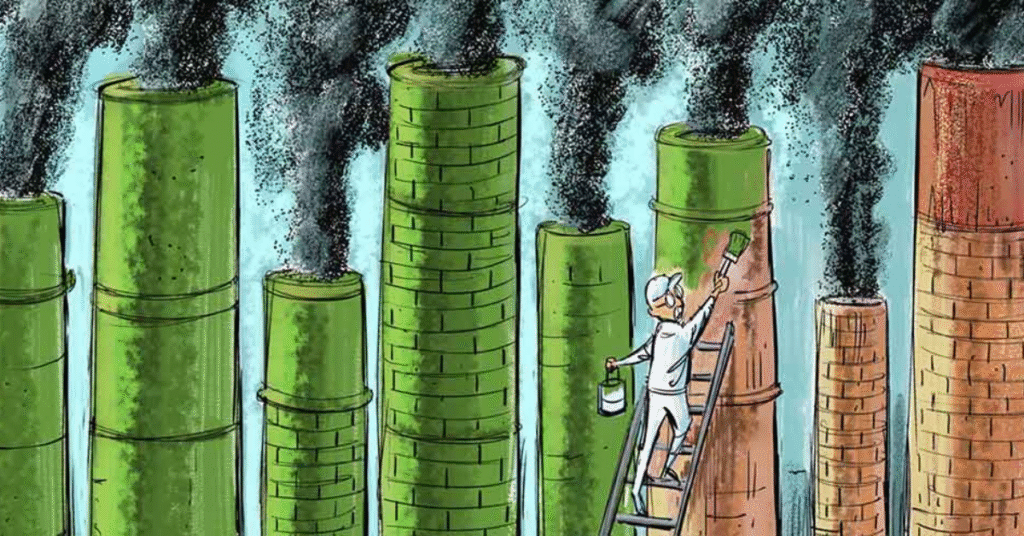
For twenty years the global smart-city industry has worked exactly like the used-car market George Akerlof dissected in his 1970 paper on lemons. Developers arrive with dazzling fly-through videos of towers wrapped in vertical forests, promise “LEED Platinum pending” and “future-proof sustainability”, collect their fees, and vanish. Cities and investors cannot tell whether they have bought a regenerative district or an expensive white elephant until the energy bills arrive, the green walls die, and the carbon footprint turns out to be larger than the old city it replaced.
The result is pure market failure. Honest developers get priced out because no one believes their claims either. Quality collapses. Trillions of dollars are poured into prestige projects that quietly keep burning fossil fuels behind a curtain of PR.
Policy Before Concrete
Our Founder Dr. Alias C. Jacob refused to play that game. Long before a single excavator broke ground, he and his Vineyard Management Consulting Advisory Board locked every stakeholder into a governance structure that aligns 100% with the UN-Habitat New Urban Agenda and SDGs 3, 7, 9, 11, 12, 13, and 17. Mr. Liébano Sáenz Ortiz, former chief of staff to the President of Mexico, helped design the public-private partnership contract that Sharjah now exports as the regional benchmark.
The clause that changes everything is simple and brutal: miss the independently verified annual performance targets on energy, water, waste, or carbon and the private partner forfeits a tranche of equity. There is no “pending certification” loophole, no creative accounting, no escape hatch.
Buildings That Actively Heal
Ned Allam, Vineyard’s chief architect and a United Nations urban adviser, designs as though the land itself is the primary client. Triple-layered envelopes shade and ventilate naturally. Landscape systems harvest every drop of rain and condensate, treat it, and return it cleaner than they found it. Biophilic corridors bring daylight and greenery so deep into the buildings that occupants forget they are inside a dense urban district.
LEED Platinum and WELL v2 are treated as table stakes, the same way a three-star Michelin kitchen treats basic food-safety rules. The real target is site regeneration: when the district is complete, soil health, biodiversity, and groundwater tables must all be measurably higher than on day one.
Anush Gopalan built the enforcement layer. Tens of thousands of IoT sensors feed data streams into digital twins that model the entire district in real time. The twins predict tomorrow’s peak cooling load to the nearest kilowatt-hour, forecast water demand to the nearest litre, and reroute energy flows fifteen minutes before anyone notices a cloud crossing the sun.
Hanwha Q Cells panels, LSIS smart grids, and KT Corp telecommunications are the visible hardware. While the invisible machine-learning stack optimises everything continuously. Food waste becomes biogas in under 24 hours. Greywater becomes landscape irrigation. Blackwater becomes Class-A fertilizer. Nothing crosses the district boundary except clean air, surplus renewable power, and verified carbon credits.
Tokenised Proof in the Open
This is the part that finally kills the lemon trade. Every tonne of CO₂ avoided, every cubic metre of water saved, every excess kilowatt-hour exported to the Sharjah grid is minted instantly as a blockchain-tokenised real-world asset. A pension fund in Norway or a sovereign-wealth investor in Singapore can buy a slice of the district and watch, live on their phone, exactly how many tonnes their capital removed from the atmosphere this quarter.
There is no more “trust us, the third-party verifier is coming next year.” The verifier is the public, immutable, and updated every minute.
From Sharjah to Anywhere
The entire model was built to be copied. Take the Sharjah governance contract, the regenerative design standards, Gopalan’s sensor-and-twin stack, and the tokenised finance layer, and you can stamp out another carbon-positive district in Mumbai, Jakarta, or São Paulo at a fraction of the original engineering cost. The second and third iterations are already cheaper because the digital library and policy templates exist.
Just as Uber destroyed the taxi driver’s incentive to take the long route and Carfax killed the used-car dealer’s ability to hide accident history, Vineyard is destroying the smart-city lemon market forever.
Developers who still show up with glass towers, a rooftop solar array for the brochure, and a prayer for future certification will soon discover that cities, ministries, and institutional investors can now see the difference between genuine planetary repair and marketing wallpaper.
The hollow smart city has met its match. In Sharjah the future is already running a surplus, and it is paying dividends to the atmosphere, the aquifers, and the people who live there. The rest of the world will soon follow.
References
Akerlof, G. A. (1970). The market for “lemons”: Quality uncertainty and the market mechanism. The Quarterly Journal of Economics, 84(3), 488–500. https://doi.org/10.2307/1879431personal.utdallas.edu
BEEAH Group. (2025). BEEAH: Pioneering sustainability and innovation. https://www.beeahgroup.com/beeahgroup.com
International WELL Building Institute. (n.d.). WELL v2: Overview. https://www.wellcertified.com/certification/v2-pilot/wellcertified.com
International Organization for Standardization. (2015). ISO 14001:2015. Environmental management systems — Requirements with guidance for use. https://www.iso.org/standard/60857.htmliso.org
Kaiterra. (2024, August 28). How to meet IWBI’s new WELL v2 certification. https://learn.kaiterra.com/en/resources/how-to-meet-iwbis-new-well-v2-certificationlearn.kaiterra.com
Sharjah24. (2025, June 28). Al Nuaimi: Vision 2031 charts UAE’s sustainable future. https://sharjah24.ae/en/Articles/2025/06/28/kmr7sharjah24.ae
U.S. Green Building Council. (n.d.). LEED rating system. https://www.usgbc.org/leedusgbc.org
United Nations. (2015). The 17 goals: Sustainable Development Goals. https://sdgs.un.org/goalssdgs.un.org
United Nations Human Settlements Programme (UN-Habitat). (2016). The New Urban Agenda. https://habitat3.org/the-new-urban-agenda/habitat3.org
Vineyard Holding. (n.d.). Leadership: Dr. Alias C. Jacob. https://www.vineyardholding.com/leadershipvineyardholding.com
“We the UAE 2031.” (n.d.). We the UAE 2031: Home. https://wetheuae.ae/enwetheuae.ae
Zaha Hadid Architects. (n.d.). BEEAH Headquarters – Sharjah, UAE. https://www.zaha-hadid.com/architecture/beeah-headquarters-sharjah-uae/zaha-hadid.com